
What Happens When We’re Called to Fix Another Contractor’s Work?
- Michael Smego
- Feb 26
- 2 min read
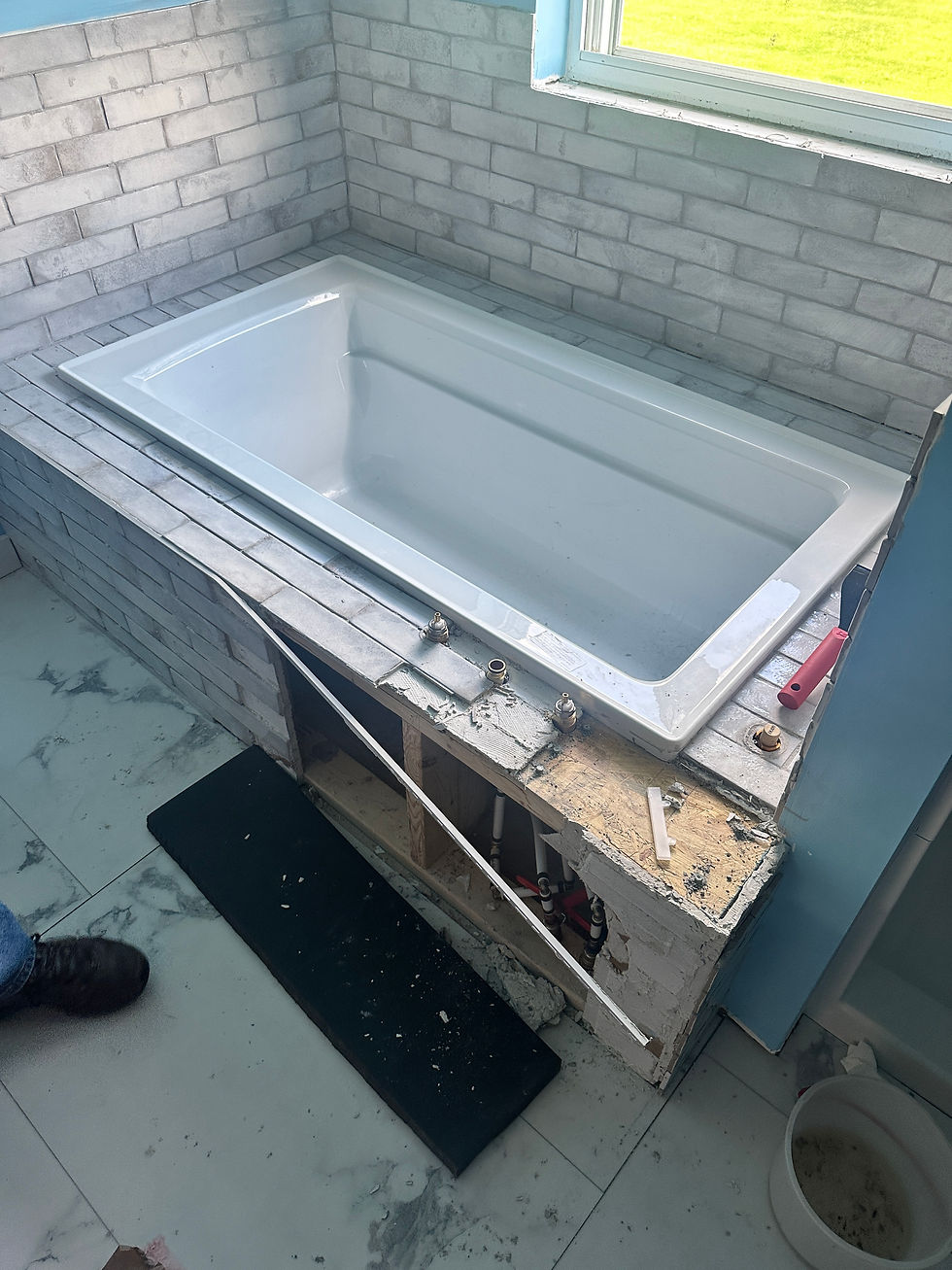
Not every project begins with new construction.
Occasionally, homeowners contact us after a renovation has already gone wrong. In those situations, the original contractor is no longer involved, and the homeowner is left dealing with defective tile work, plumbing problems, or incomplete construction.
When we step into these projects, we are not correcting our own installation. We are evaluating and rebuilding work performed by someone else.
Why Do Correction Projects Happen?
Most correction work stems from one or more of the following:
Improper shower waterproofing
Incorrect plumbing connections
Poor tile installation
Lack of proper slope toward drains
Incomplete code compliance
Substrate failure beneath finished surfaces
Many of these issues are not immediately visible. Problems often surface weeks or months after installation — typically when moisture begins to travel beyond the intended waterproofing layer.
By the time a homeowner reaches out, frustration has usually set in.
Why Cosmetic Repairs Rarely Work
In bathroom and tile projects, surface materials are only part of the system.
Tile and grout are not waterproof.Waterproofing membranes, drain integration, and plumbing connections are what protect the structure behind the finish.
If those components were installed improperly, the only responsible solution may be:
Partial removal of tile
Full tear-out of the shower assembly
Rebuilding plumbing connections
Reinstalling waterproofing systems correctly
There are rarely shortcuts when foundational systems were installed incorrectly.
Our Evaluation Process
When called to assess a prior installation, the first step is diagnosis — not demolition.
We evaluate:
Whether proper waterproofing systems were used
Whether plumbing connections meet code
Whether substrates are structurally sound
Whether repairs are possible or full reconstruction is required
Only after identifying the root cause can a proper plan be developed.
Correction work requires careful assessment before any rebuilding begins.
Why Correction Work Is Often More Complex Than New Construction
Starting fresh allows every step to follow a planned sequence.
Correcting prior work requires:
Identifying hidden deficiencies
Working within existing structural conditions
Protecting undamaged areas
Ensuring the rebuilt assembly integrates properly
It is often more technically demanding than building new.
Rebuilding the Right Way
When reconstruction is necessary, the focus shifts to:
Installing proper waterproofing systems
Ensuring correct drain integration
Verifying plumbing integrity
Meeting or exceeding local building code
Prioritizing long-term durability
The goal is not to make the surface look better temporarily.The goal is to rebuild the system correctly so the issue does not return.
Final Thoughts
Construction mistakes can occur when proper systems, oversight, or training are lacking. When homeowners reach out after experiencing those mistakes, the focus is not on assigning blame.
The focus is on restoring the space properly.
Whether starting from new construction or correcting a prior installation, the standard remains the same:
Code compliance
Proper waterproofing
Sound plumbing
Long-term structural integrity
Sometimes the most important work is not building from scratch — it is rebuilding the right way.


Comments